
Research systems, inspected in detail.
Each project is presented with its problem, method, evidence boundary, and primary source.
CausalInformationFlowinTransformerResidualStreams
Causal experiments using activation patching, intervention, probing, and ablation to study how specialist attention heads interact through GPT-2's shared residual stream.
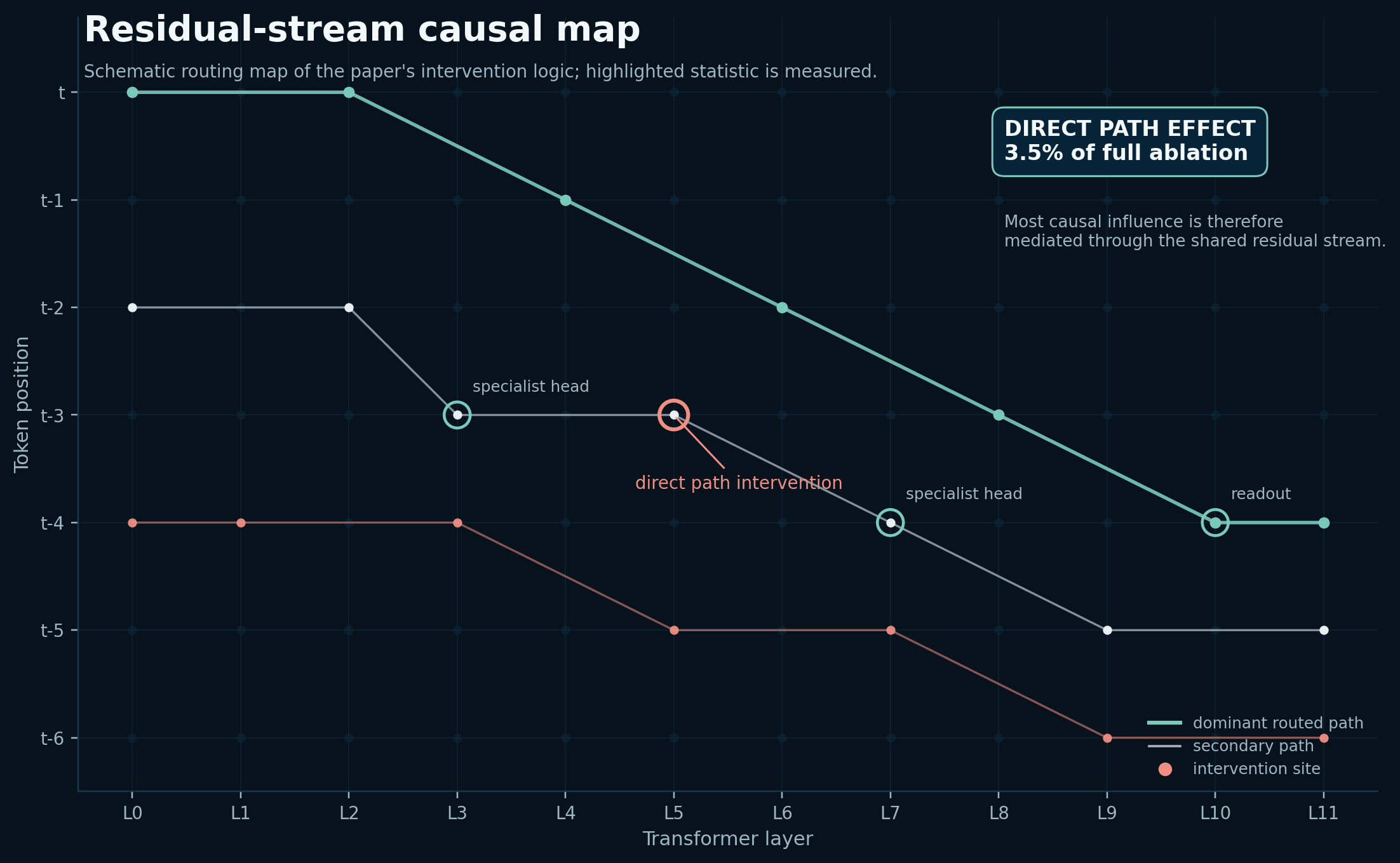
A causal study of trajectory-conditioned semantics and dynamic computational pathways in GPT-2 Small.
Activation patching, targeted intervention, linear probing, ablation, and topology analysis are used to trace information through the shared residual stream.
The public preprint reports its measured results and limitations. The primary paper remains the source of record for every quantitative claim.
AXON visualizes sparse-autoencoder feature activations token by token. It is an implementation artifact of this research, not a separate research claim.
LEMMA
A neuro-symbolic mathematical reasoning system combining transformer-guided proposal generation, Monte Carlo Tree Search, symbolic rules, and verifiable state transitions.
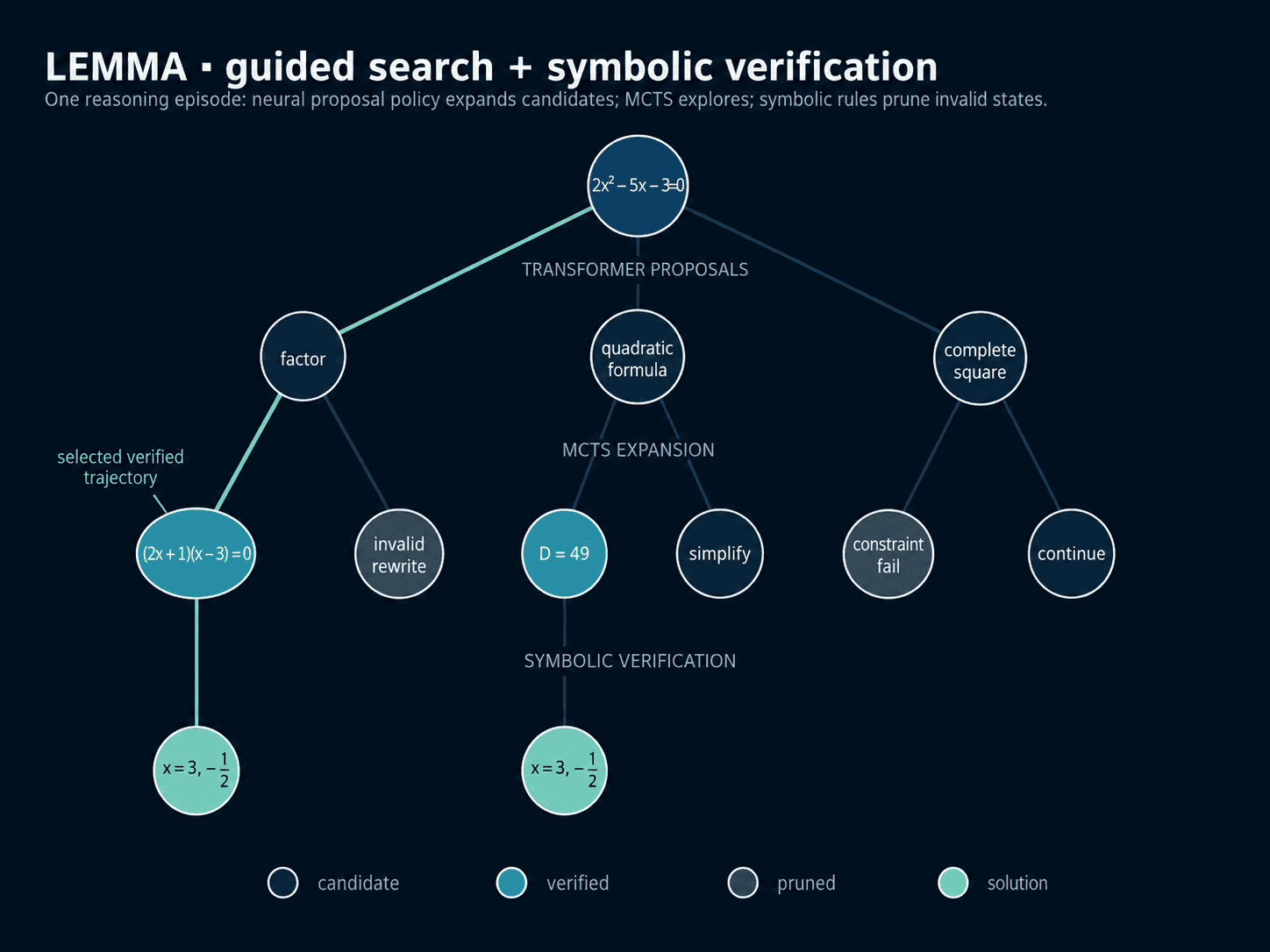
Mathematical reasoning needs broad search while every accepted transformation must remain explicit and verifiable.
A learned proposal mechanism prioritizes promising next transformations without replacing symbolic validation.
Monte Carlo Tree Search explores candidate paths over an extensible rule system.
Each state transition is checked symbolically before it can advance the reasoning trace.
GS-DroneGym
Photorealistic aerial-agent simulation combining 6-DOF drone dynamics, Gaussian Splatting rendering, waypoint supervision, and synthetic VLA trajectory generation.
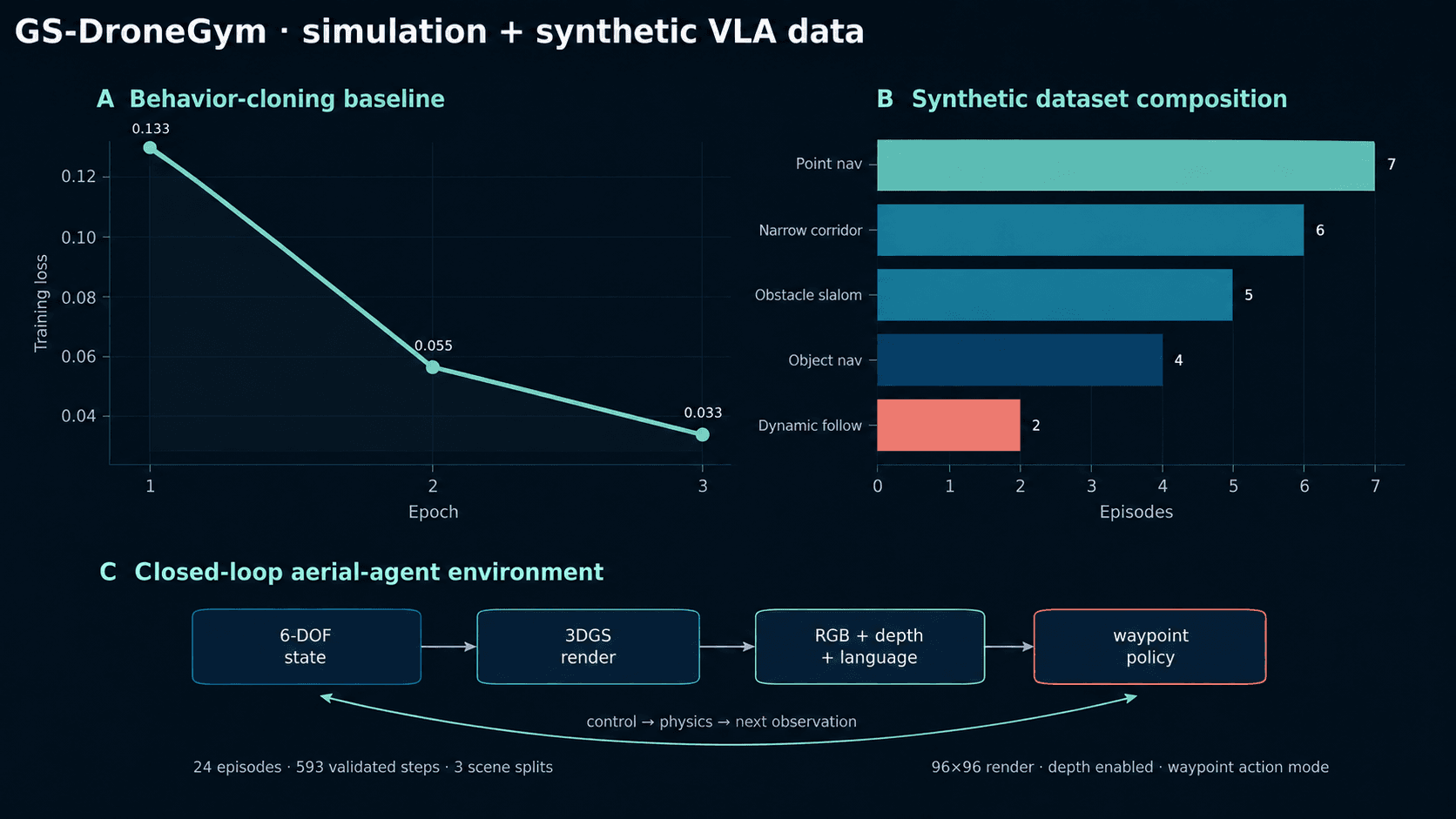
A drone-first environment for embodied-learning research and reproducible trajectory generation.
Six-degree-of-freedom dynamics run against Gaussian Splatting scenes to narrow the visual gap between simulation and reconstructed environments.
Episodes align observations, state, language, waypoints, and safety annotations along a shared trajectory.
The pipeline exports synthetic episodes and supports benchmark-oriented data adapters described in the public repository.
Activation-spaceinterventionsforfrozenlanguagemodels
An experimental framework for SAE-guided activation intervention and causal-control tests in frozen language models.
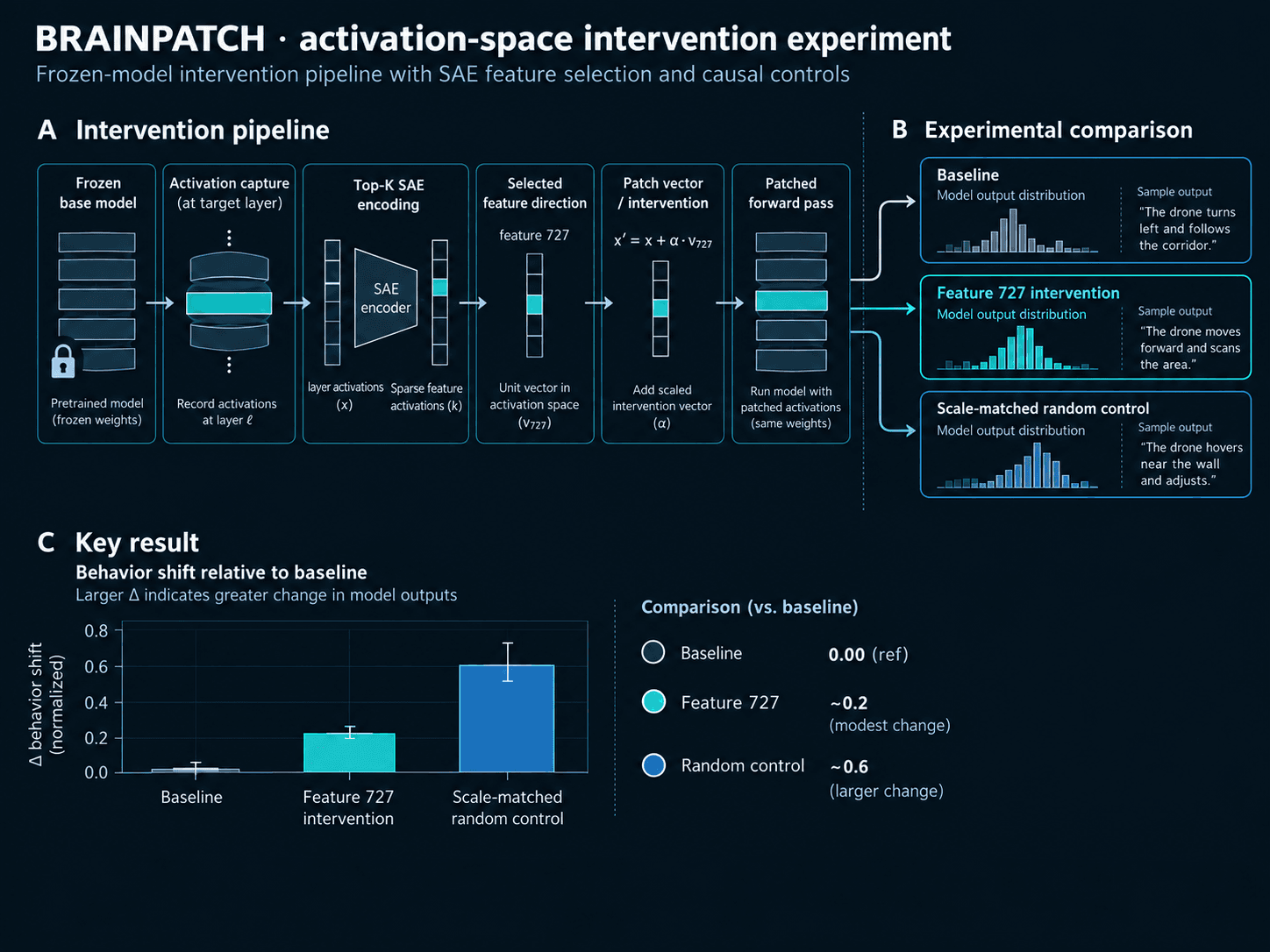
The system edits selected activation-space features in a frozen model and measures downstream behaviour.
Sparse-autoencoder features provide intervention targets without updating model parameters.
Controlled comparisons test whether an activation edit produces the intended behavioural transfer.
The experiment did not validate reliable behavioural steering. That failure boundary is preserved as part of the evidence.